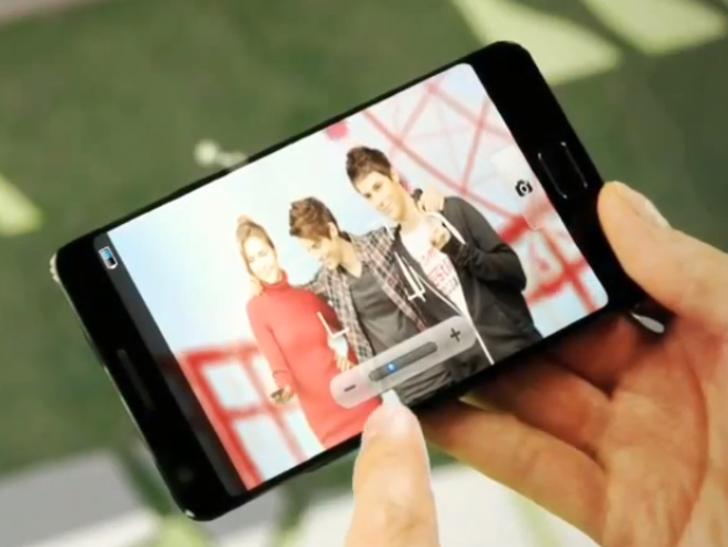
While announcing Galaxy S3 at an event in London, Samsung said the device would support wireless charging when used with a special charger that would be sold separately.
This brings up a question: How does wireless charging work? Among the engineers and scientists, wireless charging is known as 'inductive charging'. It utilizes two smart coils - one in the charger and another in the device that is getting charged. The primary coil creates a very small electromagnetic field around the charger through which electricity can be transferred. The secondary coil, which is in the phone, receives the power from electromagnetic field and converts in back into electric current to feed it into the battery.
The technology is still in the early stages and it works best when the distance between the two coils is few millimeters. That's the reason why users have to place the device on the charger.
The main benefit of wireless charging is that it removes one more wire. This not only makes it easier to charge the phone but also has aesthetic appeal. At the same time, wireless charging has poor efficiency. This means it takes longer to charge the battery through wireless charger.
Galaxy S3 is not the first phone to use wireless charging. Three years ago Palm commercialized the technology and sold a charger called Touchstone that allowed phones like Pre and Pixi to be charged wirelessly. Powermat is another company that sells special chargers, which can be used with iPhone and other devices for wireless charging.
After introducing the technology in 2009, Palm supported it in almost all of its devices. Even Touchpad, which was introduced in the market last year after Palm had been acquired by HP, had this feature. Of course, Palm is dead now.
There is a chance that Samsung is doing things differently. But that is not apparent. The company says that to charge Galaxy S3 wirelessly, users will have to keep the device on the 'special charger'. This is exactly how Touchstone worked.
Flipkart
Showing posts with label Samsung Galaxy. Show all posts
Thursday, 10 May 2012
Tuesday, 8 May 2012
Samsung Galaxy S3 review: Hands on preview
Samsung's aim tonight was to persuade everyone that this was the biggest Android handset launch of the year - overshadowing anything that happened back in March at Mobile World Congress – and it wasn’t taking any chances. The event may have been grandly titled Samsung Mobile Unpacked 2012, but there was only one product coming out of the box. No tricksy Apple naming schemes here either, as the Samsung Galaxy S3 was duly unveiled within five minutes.
Samsung Electronics President JK Shin revealed the refreshingly predictable name
Supporting that unveiling was the cavernous main hall of Earls Court, a small orchestra, a truly gigantic cinema screen and Suzi Perry, previously of the Gadget Show. After all that, the admittedly impressive little handset could have seemed a little underwhelming, but it stood up well to the hyperbole.
It really was a very, very big screen
A GALAXY OF SPECS
There's a lot to say about the new Samsung Galaxy S3, but let's start with those all important specifications. While minute in comparison to Samsung's huge cinema screen at the event, the 4.8in display on the new S3 is a whopper, just edging out the 4.7in screen we saw recently on the rather excellent HTC One X. In practice of course there's little to nothing between the two displays in size. The next device up in Samsung's line is the Galaxy Note with its 5.3in screen, but the S3 feels far smaller than that goliath and is very pocket friendly.
Slim and curvy, but not groundbreakingly so
The S3 measures 137x71x8.6mm, compared to 134x70x8.9mm for the HTC One X, except for the extra couple of milimetres at the top there's nothing in it, and aesthetic details like the width of screen bezels are very similar too. There's nothing in it when it comes to weight either with only 3g seperating the heavier S3 from the HTC One X.
It's a compact handset considering the large display
The Samsung Galaxy S3's stand out attribute is its 4.8in super HD AMOLED screen. This OLED-based display has a headline resolution of 1,280x720 pixels, however it's not a Plus-branded display, so it we're assuming it doesn't have have red, green and blue subpixels for every pixel, reducing colour accuracy and so the actual resolution of the display.
This close-up shows the Pentile pixel structure of the display – click to enlarge
On the plus side, the high headline resolution does help offset many of these problems; plus it does have all the usual advantages of OLED over LCD, with deep blacks, vibrant colours and lower-than-usual power consumption. For a Pentile display it also looked remarkably clean and crisp when using it as you would normally – with none of the colour casts seen on lesser examples.
It's the lack of the word Plus that is key to that announcement
BEYOND THE STARS
Speaking of power consumption and battery life, the Samsung Galaxy S3 should be a winner. Peeling off the wafer thin rear cover (more on that shortly) revealed a whopping 2,100mAh removable and replaceable battery. We applaud the fact that you can get into the phone and switch out a faulty or worn-out battery yourself. Plus at 2,100mAh it's far bigger than the S2's 1,650mAh battery, or the HTC One X's 1,800mAh effort.
A whopping great battery, and a removable one at that, makes the S3's compact dimensions all the more impressive
As well as the display, the battery is powering a quad core chipset. The name and speed of this wasn't announced, but it's believed to be Samsung's own Exynos 4 Quad which should run at 1.4GHz. It will be interesting to see how this stands up to more common brands, such as Qualcomm and Nvidia, when it comes to application and graphics performance.
Add more memory if needed via the micro SD card slot
Also behind the rear cover is a micro SD card slot, so you can expand upon the 16, 32 or 64GB of internal storage. With SDXC cards you can add in theory up to 64GB of additional storage. As usual with modern handsets, it takes a micro SIM.
SNAPPING THE STARS
Samsung has upgraded the capabilities of its camera from the S2, if not the headline 8-megapixel figure. The main addition is a great burst mode, that can snap up to 20 photos at a rate of 3.3 snaps per second. Camera start up times have also been reduced to under 1 second from switching to the camera to first shot. It was hard to get any idea of image quality on the peculiarly lit show floor, but we'll bring you some head-to-head examples as soon as we can.
Burst mode and enhanced photo-sharing capabilities are the stand outs from the new camera
Taking good photos is only half the game with a smartphone camera though. The Galaxy S3 also has some powerful-looking functions for getting more out of your photos afterwards. Samsung have added facial recognition technology, similar looking to Google's own Picasa software (maybe something we'll see built-in to Android 5?). It learns to recognise individuals in your contacts list and offers to share photos with them automatically by MMS or Text (we're guessing that social networking options will follow soon).
The new front camera now shots in HD
The front camera has been beefed up as well, and can now shoot 720p video at 30fps, so you can use it for high-definition video chat – if you've got the bandwidth upstream to send it. Both the front and back cameras now benefit from back-illuminated sensors, and so should gain a big boost in low light conditions compared to their predecessors.
A PLASTIC GALAXY
The new Samsung Galaxy S3 is slender and curvaceous, but despite Samsung's talk of its Hyperglaze finish, you can't get away from the fact that this is a very plastic phone. While Apple has its glass-finish on the iPhone 4S, HTC has oxidised metal on the One S, and Nokia uses a polycarbonate lozenge shape on the Lumia 800, it's hard to get equally excited about the S3's finish.
The design and build of the S3 was its least impressive facet
Although we applaud the removable back panel and its practicality, the bendy, wafer-thin piece of plastic that you almost peel off the rear doesn't shout next-gen handset at us. We're sure that Samsung knows what it's doing, and the S3 will likely wear well, but it simply doesn't quite have the wow factor that some other recent handset have had. In short, we expected more.
A MULTITUDE OF FEATURES
As well as all the usual smartphone stuff, Samsung was at pains to point out all the additional unique features that you get with the Galaxy S3. Now we didn't get a good chance to try these in the rugby scrum of the demo stands, but some should be very intriguing if they work flawlessly.
A simple but god one that we did get to try was Smart Stay. With this, the front-facing camera prevents the screen from going into standby if someone if looking at the phone. This means you can linger over a particular passage in a webpage, book or email, without having to constantly remind the phone you don't want it to shut down.
Another clever idea is Direct Call, this automatically dials people when you raise the phone to your ear. For example, if you're half way through a text or email, and think it will be easier to call them, just raise the phone to your ear and it will dial that persons default number immediately.
Talk to your Galaxy S3 with S Voice
Samsung has also introduced its own Siri-style voice commands with S Voice. This accepts natural language commands in much the same way as the iPhone 4S. We couldn't get it work on the very noisy show floor, but the onstage demos looked pretty good. We look forward to comparing the two head-to-head soon.
LAUNCH FOR THE STARS
The Samsung Galaxy S3 will launch in the UK and Europe on the 29th of May in a 3G HSPA+ guise – with the US getting a 4G LTE model come June. No pricing was available at the event, but we imagine it will be around 35GBP a month on contract. We're really looking forward to getting to spend more time with the unique extra features, and to give that new Xynos chip some benchmarks.
Will the Galaxy S3 be as big as Samsung is suggesting?
The Samsung Galaxy S3 didn't blow us away in the end, it's not going to blow the competition out of the water based on our first impressions. However, its combination of a good screen, big battery and slim dimensions still mean it has got a very good chance of taking the number one spot.
Wednesday, 29 February 2012
Samsung Galaxy Note review: The smartphone that ‘Samsunged’ Samsung
Samsung’s Galaxy Note is a giant smartphone. Or a teeny tablet. After using AT&T’s version of this device for several days now, I’m still not quite sure which is the case. It handles voice calls like a cell phone and it runs Google’s Android 2.3.6 Gingerbread smartphone operating system, but it feels very much like a tablet and it includes a stylus, which hasn’t been seen alongside a smartphone in this hemisphere for quite some time. Somehow, however, Samsung manages to pull it all together into one interesting package that might not have been worth the $10 million introduction, but it could certainly find a niche in today’s supersized smartphone market. Maybe.
Samsung’s Galaxy Note has plenty of room for cutting-edge technology within its cavernous case, and though we are on the verge of seeing the first crop of quad-core smartphones unveiled next week at the annual Mobile World Congress trade show in Barcelona, Spain, the Galaxy Note has specs that will still pack a punch once the dust from MWC clears.
A dual-core 1.5GHz processor powers the Galaxy Note and it does a fantastic job of allowing the user to dart around Android 2.3.6 with ease. Scrolling in several apps that are notoriously problematic on Android devices seemed noticeably smoother on this handset than on other Gingerbread phones, and I haven’t really managed to trip up the Galaxy Note even with a number of apps running in the background. Of course there are exceptions thanks to poorly made applications like the official Twitter app, but issues that lie in the hands of developers certainly can’t be blamed on the Note.
The Galaxy Note includes 16GB of internal storage and another 32GB can be added thanks to microSDHC support. And that external storage might come in handy considering all the extra apps and services that come pre-installed on this device. Beyond the AllShare DLNA sharing app, City ID, Amazon Kindle, Facebook, Samsung Social Hub and qik Video Chat, there are a number of AT&T-brand apps that come on the Galaxy Note. Included among them are AT&T Navigator, AT&T FamilyMap, AT&T U-verse Live TV, YPmobile, AT&T Address Book, AT&T Messages, myAT&T and AT&T Code Scanner.
I’m not quite sure how this happened, but the Galaxy Note only has a 2,500 mAh battery. “Only” is an odd word to be using in reference to a 2,500 mAh smartphone battery, but Motorola managed to squeeze a 3,300 mAh power pack into the significantly smaller DROID RAZR MAXX. The Note’s big beautiful display could’ve used a bit more juice than is currently afforded by the 2,500 mAh battery pack, and I was able to get about a day of usage out of a single charge. Compared to the 60 hours I was getting out of the RAZR MAXX, the Note was a bit disappointing.
The Galaxy Note isn’t just the largest smartphone Samsung has ever made, it’s also the most solid. In fact, it’s not even close.
I regularly take Samsung to task with regard to the quality of its hardware, which has historically been sub par compared to rival devices. I often call Samsung phones “diamonds in the rough” because the displays are always so fantastically vivid while the hardware that encases them is typically reminiscent of a $10 Playskool toy. I probably explained my position best in my Galaxy S II review this past October: “Mounting Samsung displays in the cases that often surround them is akin to mounting a flawless 4-carat diamond on the base of a ring pop.”
The Galaxy S II improved matters a bit and the Galaxy Nexus is a marginal improvement as well, but the unibody aluminum cases on some HTC smartphones or the glass and the brushed aluminum construction of the iPhone 4S puts this South Korea-based vendor’s hardware to shame.
Samsung’s Galaxy Note is a different beast. The company still opted for plastics over more desirable materials for the exterior construction of the handset, but the result is infinitely more solid than other Galaxy phones.
The Note has a good weight to it. It’s light for its size, thankfully, and the back of the device is made of solid glossy plastic as opposed to the flimsy textured plastic Samsung has been using in a number of its smartphones recently. I generally prefer a soft-touch feel on smartphones but the solid hard plastic works well on this particular device. The bezel around the edges of the phone is hard plastic as well, and the face is glass.
The top edge of the Galaxy Note is home to a standard 3.5-millimeter audio jack as well as a small secondary microphone for noise cancellation. The right edge holds only the power/lock/unlock button and the left edge has the device’s volume rocker. The bottom of phone includes a microUSB port, the device’s main microphone and a slot in which the “S Pen” stylus sits securely. On the back of the Note lies the camera lens and LED flash, as well as a small opening near the bottom for the speaker. Like so many other Samsung smartphones, the Note does not take great still images despite its 8-megapixel sensor. They’re adequate as long as lighting is decent, but I found 1080p HD videos captured by the Galaxy Note to be far more impressive than photographs.
On the front of Samsung’s Galaxy Note sits a massive 5.3-inch Super AMOLED display with 1,280 x 800-pixel HD resolution. A thin slot for the ear speaker is positioned above an AT&T logo to the north of the display, and sensors are positioned to the right of the speaker along with a front-facing camera for video chats and self portraits. Beneath the screen, there is a Samsung logo along with the four standard Android navigation buttons.
A side note regarding this phone’s display: in 2012, there is just no excuse for launching a new smartphone without an effective oleophobic coating on the screen. The Galaxy Nexus picks up far less grease than the Galaxy Note, so it is quite clear that Samsung and its manufacturing partners are capable of making a handset that doesn’t look like its owner used it to fry bacon after just a few minutes of tapping and swiping.
Android fans looking to turn heads should look no further. Short of luxury brands like Vertu and handsets encrusted with gems by third parties, there probably isn’t a cell phone on the planet that will attract more attention than the Galaxy Note. During my time with the device, I was approached by a number of people eager to figure out exactly what I was tapping away on. Most of them, however, seemed to walk away more confused than they were to begin with.
Samsung basically just “Samsunged” itself.
My sincere hope is that this is the turning point in the giant smartphone trend, and that we will now see smartphones shrink back down to manageable sizes. Having a handful of plus-sized handsets on the market is a good thing. Choice is a good thing. Smartphones like the Galaxy Note and LG Vu have taken things too far though, and they are well-suited to such a small subset of smartphone users that they likely need not exist.
If the Galaxy Note was about 20% smaller, it would be a fantastic smartphone. If it was 20% larger, it would be a terrific little tablet. At 5.78 x 3.27 x 0.38 inches, however, it’s an answer without a question.
Monday, 20 February 2012
Hands on: Samsung blends tablet, smartphone and PDA with Galaxy Note
From a distance the new Samsung Galaxy Note looks a lot like the company's much-vaunted Galaxy S series of smartphones. Once you pick it up though, you realise its a far larger device, with a screen measure almost 5.3in across. This, and the inclusion of a stylus, makes it a blending of numerous traditional devices, with obvious comparisons to Dell's Streak series.
Whatever it is, and we're erring towards the moniker super-sized smartphone, it's not a small tablet, as you can tell from the version of Android used - in this case a heavily customised 2.3, rather than Honeycomb's 3.x versions. With dimensions of 147x83x9.65mm it should just squeeze into most trouser pockets, unless you prefer your jeans on the tight side. It weighs just 178g, little more than most regular smartphones.
As with the new Galaxy Tab 7.7, this device features a stunning Super AMOLED technology display. The vibrant colours and deep blacks are instantly noticeable on images and video. More amazing is the fact that Samsung has squeezed in a 1,280x800 pixel resolution, making this quite possibly the sharpest display we've ever seen. In addition to the screen, imaging fans will appreciate the 8-megapixel main camera with 1080p video recording.
It's more than just a massive, highly specified smartphone, though. The stylus - which is stored inside the phone, lets you annotate on most screens. You first need to screengrab the display, which can be done by swiping the edge of your hand, like a scanner, across the display; or by holding down a button on the stylus and making a long press.
Once grabbed there's a whole range of tools to play with, from highlighter pens to paintbrushes. The real shock was discovering that the display is pressure sensitive (as well as being capacitative), so you can press harder for a thicker, darker line. We imagine that those who like to doodle will be queuing up for the Note.
As with the tab 7.7, the Note has a dual-core 1.4GHz processor, so processing power shouldn't be an issue. No price or release date has been announced yet, but we get the feeling that the Galaxy Note could be one of the most expensive handsets ever at launch. We applaud Samsung for a brave attempt to make something a little different, and look forward to its release later in the year.
Tuesday, 14 February 2012
Samsung Galaxy Tab 2 launched
The Samsung Galaxy Tab 2 has been announced ahead of MWC 2012, with the Korean firm rebooting the chassis of its first tablet.
The new tablet features a 7-inch screen to cater for the smaller tablet lover, but more importantly is running on Ice Cream Sandwich (or Android 4.0) and may well be the first from the company to bring the next generation platform.
The rest of the technical specs are less exciting: we're looking at a 1GHz dual core processor running under the hood, with a 3MP camera on the rear.
Samsung has overlaid the Ice Cream Sandwich platform with its own TouchWiz UI too, and video calling will be supported through a VGA front-facing sensor.
Fuzzless front
The screen might not be too shabby it seems, as while it's 'only' LCD (rather than the fancy-pants Super AMOLED offerings from the Korean firm) the resolution of 1024x600 should be enough to keep users complaining of fuzzy displays.
Other key specs that don't seem to have moved things on much in a year and a half include: 1GB of RAM and the choice of up to 32GB internal memory.
Intriguingly, Samsung is referring to the device as the Galaxy Tab 2 (7.0) in its press materials, so it seems likely we'll be getting larger variants of the same device in the same way as the Motorola Xoom 2 has been offered.
Thomas Richter, Samsung's director of portfolio management, told TechRadar: "Since 2010 we have been bringing the Galaxy Tab range. In 2012, we believe that people want to experience more on the go."
The Samsung Galaxy Tab 2 UK release date has been set for March, so expect to see our full review up any time soon.
First impressions
The Samsung Galaxy Tab 2 may not be the sleekest tablet we've ever laid eyes on, but it packs the latest version of Android, known as Ice Cream Sandwich. Its specs are perfectly respectable, if a tad uninspiring. We look forward to giving it the full review treatment soon.
Design
Outwardly, the Tab 2 won't take your breath away. It has the sort of unremarkable stylings you could easily walk past, but it's perfectly respectable. The front of the device is dominated by the screen with a thick, black bezel. The grey back peeks around the edge slightly at the top and bottom, which will Samsung will be hoping keeps Apple's lawyers at bay.
Around the back of the tablet you'll find a big expanse of grey, which is about as interesting to look at as a concrete paving slab. The subtle Samsung branding makes it look a little smarter, so you could pull it out in the boardroom without being fired for gross misconduct. I haven't had chance to have a proper squeeze and poke yet, but Samsung has a generally decent record for good build quality on its products so we're expecting this new boy to be pretty good.
With a screen size of 7-inches, the Galaxy Tab 2 is considerably more hand-friendly than its bigger brother the Tab 10.1, which means you'll have a much easier time of carrying it around everywhere. On the other hand, if you want to kick back with a good movie or intend to do loads of web browsing on your sofa, you might find you benefit from a bigger screen.
That screen has a resolution of 1,024x600 pixels, which is pretty good for a device of this size. I haven't had a proper eyes-on yet, but if it offers the same super-vivid experience I've had on the Galaxy S2 and Galaxy Note, I'll be very pleased.
Android 4.0 Ice Cream Sandwich
The Tab 2 is to be the first tablet from Samsung that ships with the latest version of Android, known to its mates as Ice Cream Sandwich. It's likely the other slates in the Galaxy range will be given updates, but it's heartwarming to see a new product with the newest software as standard.
Ice Cream Sandwich is Google's latest OS, and aims to create a unified experience across smart phones and tablets. It promises to be faster and adds new features like face unlocking. I've found the face unlock feature on the Samsung Galaxy Nexus to be rather hit and miss. It's a fun novelty, but it's too easily fooled for it to be a secure safety feature.
Samsung has re-written its hilariously named TouchWiz interface for ICS too, so expect large social-networking hubs on the home screens, as well as the ebook, music and video hubs you'll find on other Samsung devices. While some of Samsung's tweaks can be quite handy, we often find it goes a bit overboard with adding extra software. If you take the time to strip out what you don't need, you'll likely see a speed increase.
Specs
Under that plain grey hood is a 1GHz dual-core processor, teamed up with 1GB of RAM. Compared to quad-core monsters such as the Asus Transformer Prime, that's not much to brag about, but it should be plenty of juice to keep a 7-inch slate ticking over.
I haven't had a chance to run my usual barrage of benchmarks on it, but with the performance tweaks of Ice Cream Sandwich, I'm hoping for a nippy experience all round.
A dual-core 1GHz chip currently provides enough power to chomp through most tasks you're likely throw at it. We'll soon start to see extremely demanding 3D games and apps though, designed to take advantage of the super-charged processors of the tablet elite, so how this little fella stacks up against them remains to be seen.
In terms of storage, the Tab 2 will be offered in 8, 16 and 32GB varieties, but it also supports microSD cards up to 32GB, so you could always opt for the cheaper version, chuck a high-capacity card inside and spend the money you've saved on sweets and puppies.
On the back of the tablet you'll find a 3-megapixel camera. Cameras on tablets aren't usually anything to write home about so we're not expecting much, but it will probably be just about good enough to get a shot of your mate passed out with pizza on his face so you can share it to Twitter. There's a front-facing 640x480-pixel camera too, for video calling.
Outlook
The Galaxy Tab 2 looks set to be a worthy update to the original Galaxy Tab. I'm chuffed it ships with the latest version of Android, and although isn't specced as heavily as some tablets, we're hoping it offers enough juice for all the mad stuff I want it to do. Stay tuned for a full review soon.
Tuesday, 7 February 2012
Samsung Galaxy S3 to be one of world's thinnest phones
Release date set for May
The Samsung Galaxy S3 could be arriving in less than three months, and push the boundaries of phone sleekness again.
According to South Korean titleElectronic Times News, the new phone will reportedly come in a package that's just 7mm thin, making it one of the thinnest on the market.
However, it wouldn't be THE thinnest, thanks to the Huawei Ascend P1 S, which launched to great (ish) fanfare at CES this year popping up at 6.68mm thick.
PCB thin-win
Printed circuit boards will allow the phone to be made up to 20% thinner according to the title, with the Galaxy S3 development team in place for nearly a year already in its quest to stay ahead of / topple the iPhone (depending on which report you read).
The media outlet also stated the Samsung Galaxy S3 release date has been set for May, which would likely put it slightly ahead of the iPhone 5 launch and allow Samsung to create some early hype for its flagship phone.
There's very little else in terms of specs or details on when Samsung will actually announce the 'delayed' phone – but it seems the notions that it will be a quad-core behemoth with a larger Super AMOLED HD screen and Ice Cream Sandwich are pretty much nailed on.
From Electronic Times News (translated)
Monday, 6 February 2012
Quad-core Samsung Galaxy S III to be unveiled at MWC 2012
Samsung’s Galaxy lineup has been one of the most sought after smartphone lines worldwide. The Galaxy S II became the company’s fastest selling smartphone ever, selling 3 million units in just 55 days. Moreover, Samsung sold more than 30 million Galaxy S and Galaxy S II smartphones worldwide as of October. There is no question that consumers are interested in the Galaxy lineup and it is almost certain that we will see a Galaxy S III in 2012. According to Korean website ETNews, the much anticipated device will debut at Mobile World Congress in February and feature a quad-core Exynos chipset. Additionally, the Galaxy S III will sport a Super AMOLED Plus 720p display, LTE connectivity, 2GB of RAM and Android 4.0 Ice Cream Sandwich with TouchWiz. It has also been rumored that Samsung’s flagship device will feature 3D technology that will integrate the device with 3D television sets. Mobile World Congress is scheduled for February 27 through March 1, 2012 in Barcelona, Spain.
Subscribe to:
Posts (Atom)